Target Audience: scientists looking to present their research to scientific non-specialists and non-scientists
Reading time: 2 minutes
Jessica Desamero, PhD
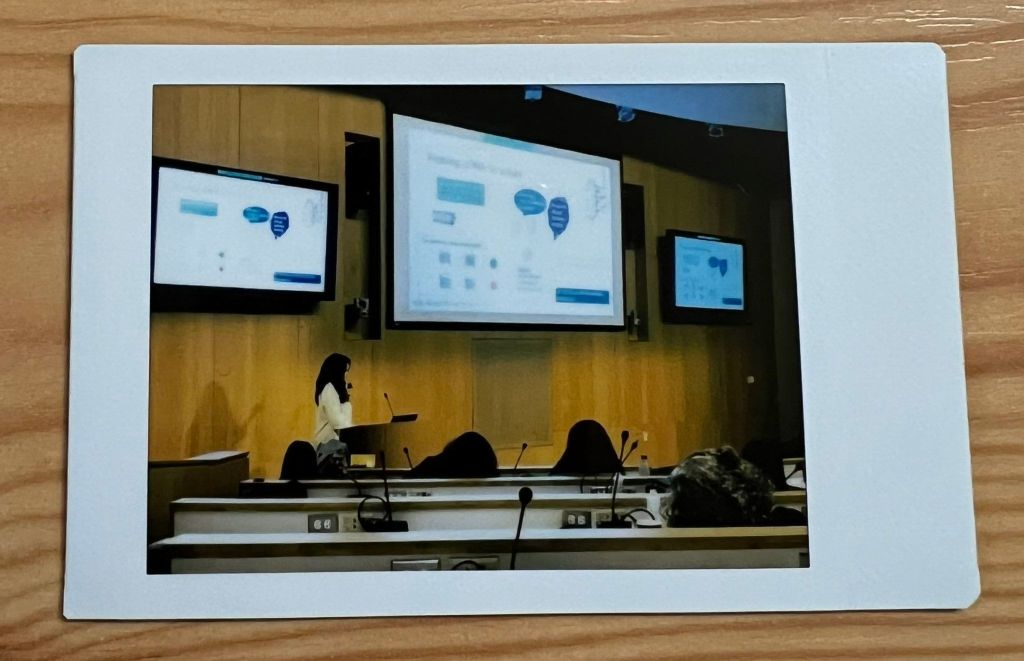
Presenting my PhD research at my school’s science communication symposium was a fun challenge. Here, I tailored my talks for two general audiences: one for graduate students of different scientific disciplines and one for an 8th grade-level audience.
I knew I couldn’t present like how I did with my thesis committee or at a scientific research conference. It required a more creative and accessible approach. Here are four main tips I kept in mind when preparing my presentations and writing the corresponding blog posts:
Avoid jargon as much as possible.
If I used too many technical words, my audience may become confused and lose interest. Therefore, I made sure to not use too much scientific jargon. If I absolutely needed to use a complex scientific term, I would make sure to define or explain it. What counts as jargon depends on your audience.
Example:
In the graduate student presentation, I defined the term “telomeres.” In the 8th grade presentation, I avoided the word “telomeres” and used “the ends of chromosomes” instead.
Be clear and concise.
Being clear and concise also helps the audience understand science more easily. This involves using simple, direct language and not adding too many extra details.
Example:
Telomeres are protective caps at the ends of chromosomes.
Analogies help.
Analogies help explain complex concepts by comparing them to something easier and simpler. In addition to helping the audience understand the concept, it can also make the presentation more relatable and engaging!
Example:
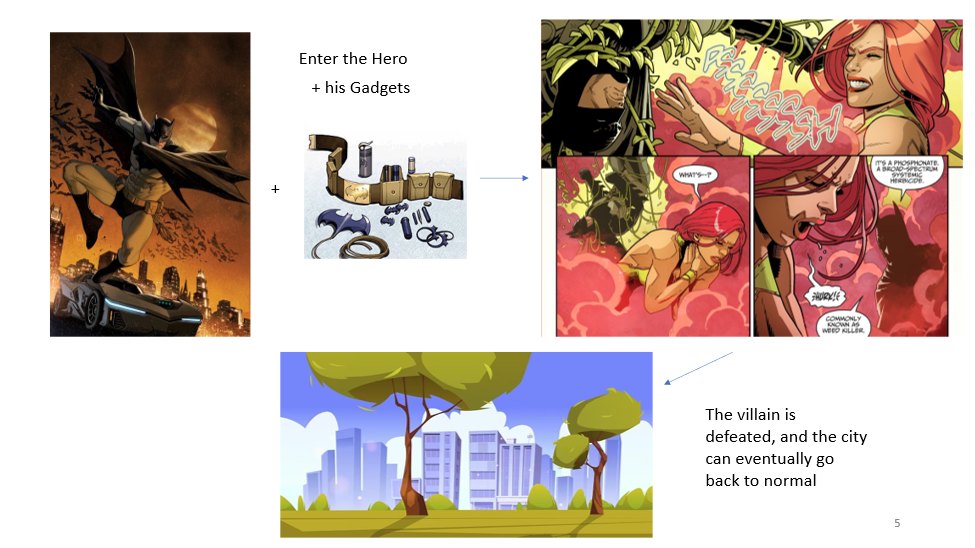
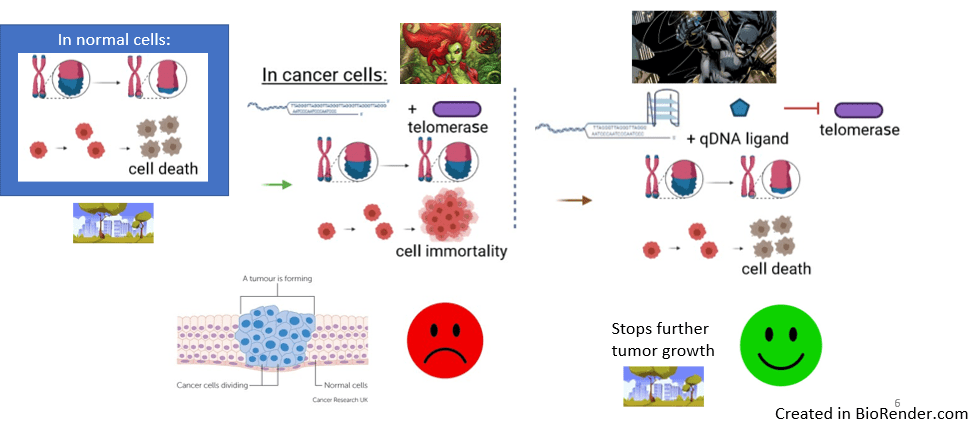
Typically, many people don’t know what DNA G-Quadruplexes are and what role they play in cancer. Therefore, I said that G-Quadruplexes were like anticancer superheroes, as these terms would be more exciting and familiar to more people. To extend the analogy, I tied in Batman and Poison Ivy.
Visuals help too.
Visual elements help tell the story in a more engaging and memorable way. I used BioRender.com to make my main scientific visual diagrams. But PowerPoint is just as effective! Sometimes, I also used a combination of the two tools.
Examples:
To read more about my PhD research, please see my previous two posts (see below)!
Posts on my PhD Research
For scientists:
Cancer’s Complex Quadruplex: Characterizing Molecular Interactions with Telomeric DNA G-Quadruplexes
For any science lover:
 Jess Translating Science
Leave a comment