Target general audience: people who enjoy reading stories about scientists’ journeys
Reading time: 5 minutes
Jessica Desamero, PhD
As a kid, Devon Semoy often watched shows on the Discovery Channel and Animal Planet. One of his favorite documentaries was Wild Discovery, which showcased a wide range of animals from around the world. From this, he became fascinated with how nature works.
Semoy continued to be captivated by wildlife throughout his teen years. He enjoyed watching every episode of Planet Earth, which featured various habitats on Earth. He also liked watching Big Cat Diary, which followed the lives of big cats in one of Kenya’s national reserves.
For college, Semoy attended the University of the West Indies, Mona in Jamaica. Here, Semoy’s love of nature evolved into an overall love of science. He took classes like physical chemistry and molecular biology. He also watched space documentaries like Cosmos: A Space Time Odyssey. By the end of college, he even wanted to discover the world of science research. And after speaking to various people about graduate school, he decided to pursue a PhD in the United States.
DNA Replication and Repair in Bacteria
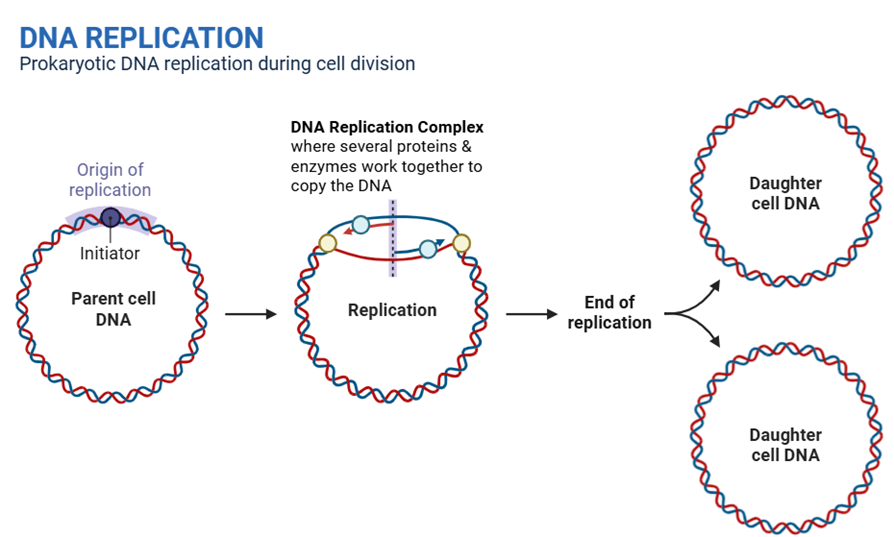
Semoy received a PhD in Biochemistry from the City University of New York (CUNY) Graduate Center. From his PhD research, he discovered his interest in learning how proteins function. He worked in the lab of Dr. David Jerulzami, and his PhD research involved characterizing proteins involved in bacterial DNA replication and repair. DNA replication is how a cell makes exact copies of its DNA, while DNA repair is how a cell fixes altered or damaged DNA.
One of Semoy’s PhD research projects involved DNA replication of a chromosome in Vibrio cholerae bacteria, the bacteria that causes cholera. “These bacteria have two chromosomes (only 10% of bacterial species have multiple chromosomes). It was already known that the main chromosome, chromosome 1, follows the typical mechanism for replication. But it was still somewhat mysterious how the secondary chromosome replicated,” he said. His project aimed to figure out how proteins interact with DNA and how the replication complex forms.
Another project focused on proteins involved in a type of DNA repair called nucleotide excision repair (NER). Most other DNA repair pathways are specific for one type of damage, while others target specific base changes, but NER can recognize a large variety of DNA alterations. “We found that question to be very interesting. How can one protein recognize such a large plethora of damages?” he said. “It must be figuring out some kind of intrinsic feature of DNA.” After years of hard work, he uncovered how. “It turns out to be a very interesting mechanism where it’s distorting the DNA to discern native from damaged DNA, and it seems to go through a very complicated series of steps to do so,” he said.
Protein Tyrosine Phosphatases and Their Role in Diseases
Currently, Semoy is a postdoctoral fellow at Columbia University in New York, where he continues to study proteins. He works in the lab of Dr. Neel Shah, whose research focuses on protein tyrosine kinases (PTKs) and protein tyrosine phosphatases (PTPs). PTKs are enzymes that add phosphate groups from tyrosine amino acids on proteins, while PTPs remove phosphate groups. Both play a role in how eukaryotic cells communicate with each other and their environment (cell signaling). They function as switches that can either turn the activity of signaling proteins on or off.
Semoy mainly works with the PTP, SHP2. “It’s a pretty important protein that’s found in many different cancers…such as acute myeloid leukemia and other blood cancers,” he said. He works to characterize SHP2 using various biochemistry, biophysics and structural biology techniques. Chemical changes to proteins, or post-translational modifications (PTMs), also play a role in several forms of cancer. Thus, Semoy aims to characterize PTMs on SHP2 too. “I’ve been trying to develop a stable version of this PTM where it can be installed on a protein. And once it’s stable and specifically installed on the protein, we can really study what the effect of the PTM is,” he said.
The Value of Research
Overall, Semoy loves research, as he can constantly create and design new things. He also enjoys the challenge of figuring out solutions to problems.
Most importantly, he believes basic science is a key tool to understand diseases. “If we have a good foundation for basic science, we can really come up with cures or other biomedical applications,” he said.
In the future, Semoy hopes to continue with research. He also encourages others to do the same. “When you go for a job in research, you can pick which aspects of research are exciting to you. And then you can really shape what your research project will turn out into,” he said. “The ability to just answer your own questions and pursue your own interests, I think that’s a really good thing.”
Even with the age of AI, researchers will still be irreplaceable. “There’s something really unique about doing research in the sense that it requires some love, some creativity, and intuition.”
Dr. Devon Semoy was interviewed for this article.
Header Image Source: Created with Canva. The headshot was provided by the interviewee.
Figure 1: Created in Biorender.com, using a DNA replication template.
Other Image Sources:
 Jess Translating Science
Leave a comment