Reading time: 5 minutes
Jessica Desamero, PhD
To honor Filipino Heritage Month this October, here are 4 Filipino scientists who have made a large impact with their notable, selfless efforts, both in their community and worldwide:
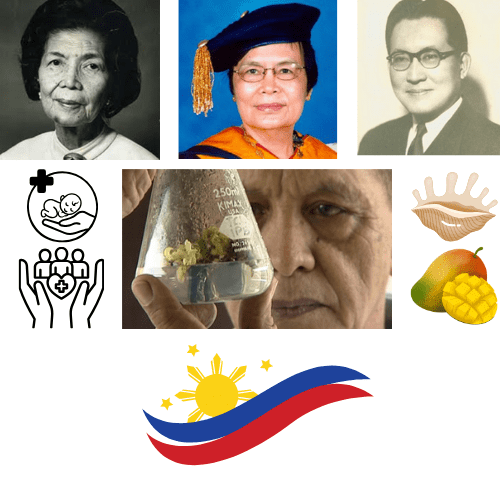
Fe del Mundo
Pediatrician, humanitarian, and advocate of Filipino children.
Based in: Philippines
Degree and Field of Study: MD, specializing in Pediatrics (University of the Philippines); MS in Bacteriology (Boston University)
Impact: The Pioneer Who Transformed Pediatrics and Child Healthcare in the Philippines
In the 1920s-1930s, child healthcare standards in the Philippines were especially poor, with many children dying from preventable diseases. This motivated del Mundo to become a pediatrician. After earning her medical degree, del Mundo spent five years in the United States doing research at several institutions to further her knowledge in pediatrics, infectious diseases and public health. She returned to the Philippines in 1941.
In 1957, del Mundo founded the first pediatric hospital in the country, the Children’s Memorial Hospital (later renamed Fe del Mundo Medical Center). She worked around the clock to help as many children as possible, and she improved pediatric care by linking her hospital with health workers in the surrounding communities. In 1966, she founded the Institute of Maternal and Child Health, the first of its kind in Asia. This Institute trained medical professionals to provide improved services in rural areas and promote community health programs on topics such as nutrition, disease prevention and family planning. Her efforts significantly improved pediatric healthcare nationwide, especially in rural communities.
Fun facts: She created the now-widely known BRAT (banana, rice, apple, tea) diet to treat diarrhea. This diet has been adopted worldwide and has helped countless patients. She also invented an incubator made from two layers of bamboo baskets and lined with heated water bottles. This allows babies in rural areas to be incubated without electrical power.
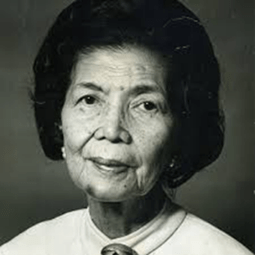
Ramon Barba
Inventor of a method to allow mangoes to grow all year-round in the Philippines.
Based in: Philippines
Degree and Field of Study: BS in Agronomy (University of the Philippines), MS in Horticulture (University of Georgia), PhD in Plant Physiology (University of Hawaii)
Impact: Tripling the Mango Yield in the Philippines
Before 1976, mangoes in the Philippines were only available in May, as mango trees in the Philippines only flowered and produced fruit for one month in a whole year. Barba developed a method to induce the flowering of mango trees using potassium nitrate spray. His invention allowed mango trees to fruit several times a year without harming the plants, tripling the mango yield of farms.
Initially, Barba decided not to file a research patent to allow local farmers to use his method for free. He later filed a patent after another researcher attempted to claim credit for his work. However, he still did not charge royalties for using his technique, as he was adamant about keeping it widely accessible to farmers, especially those in rural communities. His choice has allowed the mango industry to significantly expand and is part of the reason the Philippines is universally known for its mangoes.
Fun fact: In 2014, Barba was recognized as a National Scientist of the Philippines, which is the highest award a scientist can get from the Philippine government.
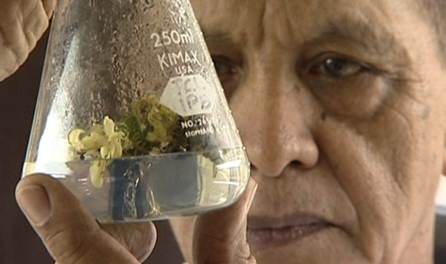
Lourdes J. Cruz
Pinoy sea snail venom specialist and creator of the Rural Livelihood Incubator program.
Based in: Philippines
Degree and Field of Study: BS in Chemistry (University of the Philippines), PhD in Biochemistry (University of Iowa)
Impact: Lauded for her contributions to neuroscience, medicine and rural communities
Surprisingly, sea snail venom has potentially promising medical applications. But in the 1970s, sea snail venom research was very limited. Along with other biochemists, Cruz explored the biochemical properties of the venom of marine predators known as Conus geographus. Her team isolated and characterized over 50 conotoxin peptides, which are the chemical components of the venom that cause paralysis. Cruz helped establish conotoxins as tools to study brain activity. This research has paved the way for the development of conotoxins to potentially treat neurological disorders. Cruz has over 120 research publications, both national and international, and has won several awards for this work.
In addition to her research contributions, Cruz has been involved with efforts to empower local communities in the Philippines with the power of science. Most notably, in 2001, she founded a poverty alleviation program called the Rural Livelihood Incubator. This program’s goal was to create job opportunities for people in rural areas. It involved building a fruit processing facility where women from indigenous tribes can work.
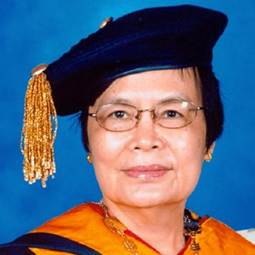
Juan Salcedo Jr.
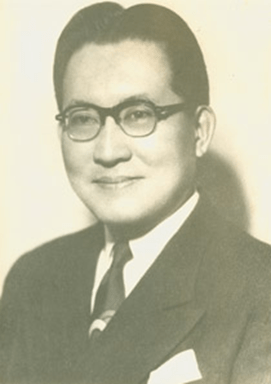
Discovered a way to treat a nutritional disorder, and was the 1st Filipino president of the World Health Assembly.
Based in: Philippines
Degree and Field of Study: MD (University of the Philippines), MA in Biochemistry (Columbia University)
Impact: A visionary who transformed Filipino nutrition and public health
In the mid-1940s, beriberi, a disease that can cause nerve damage and heart failure, was the second leading cause of death in the Philippines. After conducting a series of feeding experiments in a small Philippine province (Bataan Rice Enrichment Project), Salcedo determined that beriberi can be treated by enriching rice with the nutrient thiamine (vitamin B1). This research led to the development of rice fortified with essential vitamins and minerals like thiamine and iron. This enriched rice helped treat nutritional disorders like beriberi and reduced overall malnutrition in the country. Salcedo’s work also led to the enactment of the Rice Enrichment Law in 1952. Partly because of this law, beriberi was no longer a leading cause of death by the 1960s.
Following this discovery, Salcedo became a prominent public health figure. From 1950-1953, he served as the Secretary of Health for the Philippines. He also founded the Nutrition Foundation of the Philippines in 1960. Most notably, in 1952, Salcedo was the first Filipino to be elected as President of the World Health Assembly, the world’s highest health policy setting body.
The Header Image was made with Canva.com and used photos of the scientists found on Google.
Main Works Cited
(more references are hyperlinked throughout article)
Kollective Hustle. “REMARKABLE FILIPINO SCIENTISTS and THEIR INVENTIONS YOU NEED to KNOW.” KOLLECTIVE HUSTLE, 7 Apr. 2022, www.kollectivehustle.com/blog/remarkable-filipino-scientists-and-their-inventions-you-need-to-know.
Albano JE, Mirhan JLG, Bansal A, Jayakumar D. Dr. Fe Del Mundo: The Pioneer Who Transformed Pediatrics and Child Healthcare in the Philippines. Cureus. 2024 Aug 29;16(8):e68109. doi: 10.7759/cureus.68109. PMID: 39347137; PMCID: PMC11438303. https://pmc.ncbi.nlm.nih.gov/articles/PMC11438303/
“The Scientist, the Patent and the Mangoes – Tripling the Mango Yield in the Philippines.” Wipo.int, 2008, www.wipo.int/en/web/wipo-magazine/articles/the-scientist-the-patent-and-the-mangoes-tripling-the-mango-yield-in-the-philippines-36230.
Vilvestre, Jess. “The Pinay Whose Work Revealed a Deadly Snail to Be a Medical Wonder.” FlipScience – Top Philippine Science News and Features for the Inquisitive Filipino., 27 June 2019, www.flipscience.ph/features/national-scientist-lourdes-j-cruz/.
Jowi Carteciano. “National Scientist Lourdes Cruz Heads DOST Research Council.” Dost.gov.ph, 3 May 2012, www.dost.gov.ph/index.php/knowledge-resources/news/35-2012-news/228-national-scientist-lourdes-cruz-heads-dost-research-council.
Nutrition Foundation of the Philippines, Inc. https://nfp.org.ph/dr-juan-salcedo-jr/
FlipScience. https://www.flipscience.ph/features/national-scientist-juan-salcedo-jr/
 Jess Translating Science
Leave a comment