Type of article: Profile story (long-form)
Reading time: 9 minutes
Jessica Desamero, PhD
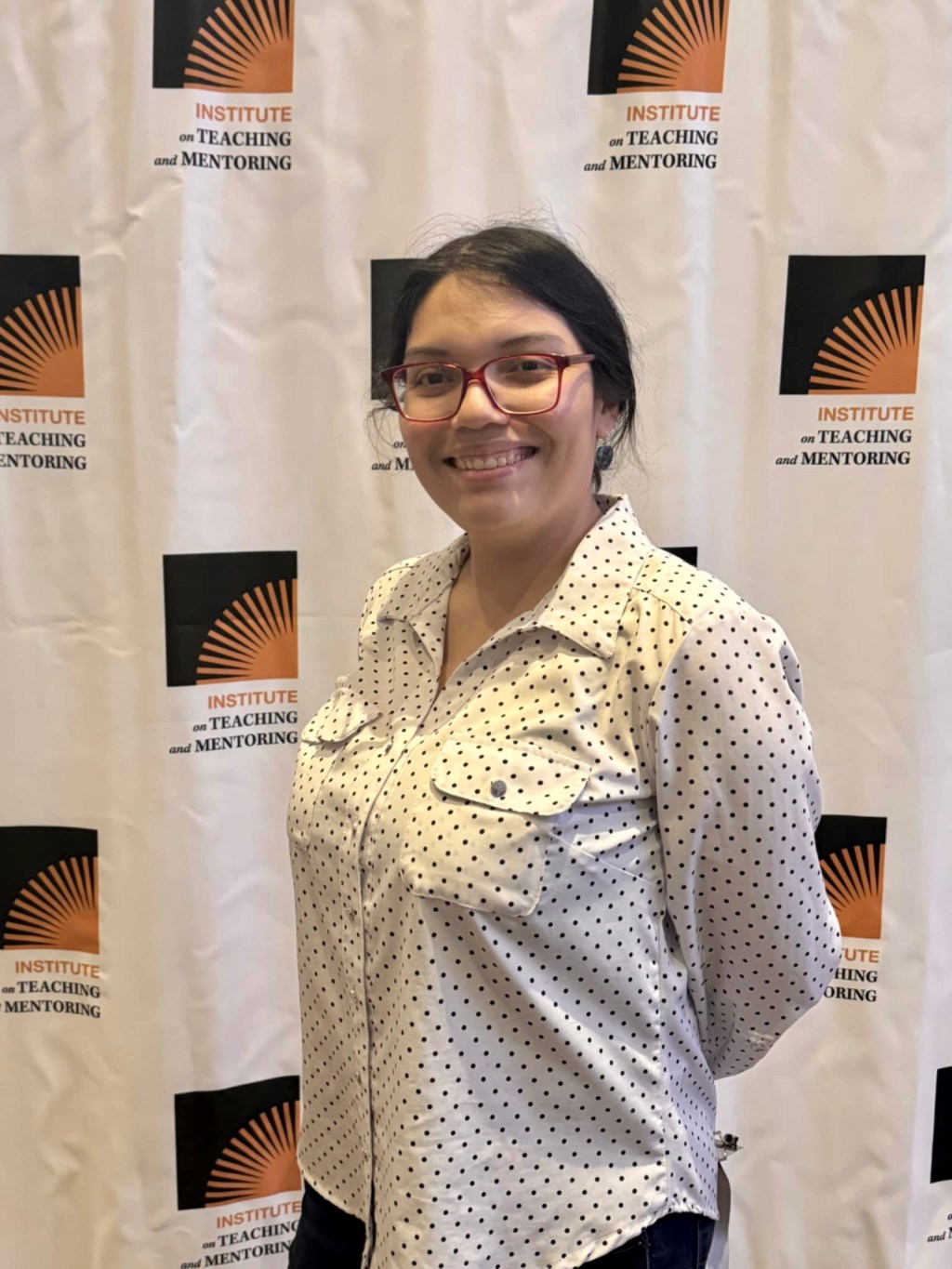
Long ago, Samantha Cobos studied music and opera. Then, everything changed when she took high school chemistry.
And she has her chemistry teacher Ms. Meleties to thank. “I was amazed at how well she was able to create these analogies and things to make it easier for us to understand,” Cobos said. Cobos then took the leap from music to science, and she obtained a bachelor’s degree in chemistry at Pace University.
At Pace, the science department was very small. “Our NMR was literally a box that was the size of a dishwasher,” she recalled. Researchers even needed to use the teaching laboratory spaces for their research. But somehow, this made the department more community-like. Professors were willing to help however they could, and Cobos came to know all the science professors well. She even tried out a bit of every professor’s research. “That’s what helped me really settle with myself that I liked science and that I was really curious about it,” Cobos said.
Her passion for chemistry continued throughout college. During her junior year, she did organic chemistry research at the lab of Jamie Lee Rizzo. She also became the secretary of the American Chemical Society (ACS) club chapter at Pace and won the ACS Scholar Award as a junior. Additionally, she served as a teaching assistant for both General Chemistry and Organic Chemistry recitation classes for three years during her undergrad. Over this time, Cobos honed her public speaking skills and developed a love of teaching.
During the summer of 2016, before the start of her senior year at Pace, Cobos participated in the Research in Science and Engineering (RiSE) program at Rutgers University, where she worked in the lab of Shishir Chundawat in the Chemical Engineering department. One project involved exploring the potential use of cellulose, the main structural component of plant cell walls, as renewable energy. Cobos worked on seeing how well cellulases, the enzymes that break down cellulose, can bind onto cello-uronic acid, or cellulose that’s been oxidized to carboxylic acid groups. She presented her research at the American Chemical Society annual meeting in 2017.

This internship solidified her interest in research and made her want to go to graduate school. “The thing that really, really inspired me there was seeing all of the equipment and the space and the joy that people had working in a space like that,” Cobos said.
“Everyone felt really excited to be there and do the research. Even when things didn’t work out the way that they thought it was going to work out, they were still happy to keep going and still curious to see why it didn’t work. That was such a new perspective on science that I didn’t really see at Pace that made me want to pursue research more.”
From Plant Chemistry to Neurodegenerative Diseases
Cobos received her PhD in Chemistry from the City University of New York (CUNY) Graduate Center. She worked at CUNY Brooklyn College in the lab of Dr. Mariana Torrente, whose lab worked on studying yeast and neurodegenerative diseases, a complete 180° from what Cobos had done in the past.
Because of her chemistry background, Cobos was interested in the electrostatic interactions between amino acids and the folding of proteins. But because she wasn’t a neuroscientist or biologist, she wasn’t really interested in the disease element of Torrente’s work. Ultimately, Cobos and Torrente found a middle ground, and she ended up studying prion proteins.
“When a prion protein (PRP) turns ‘on’ into the prion state where it misfolds and loses its original function, it can’t change back, and unfortunately this leads to a lot of catastrophic side effects within the cells, specifically in the neurons of humans,” Cobos said.
In animals, misfolded prions can cause fatal diseases that harm the brain, such as mad cow disease and scrapie. In both conditions, prions cause motor neurons to die, which in turn leads to holes in the brain tissue and eventually death of the organism. This disease can spread to humans upon consuming the diseased tissue. So far, there is no cure for prion diseases.
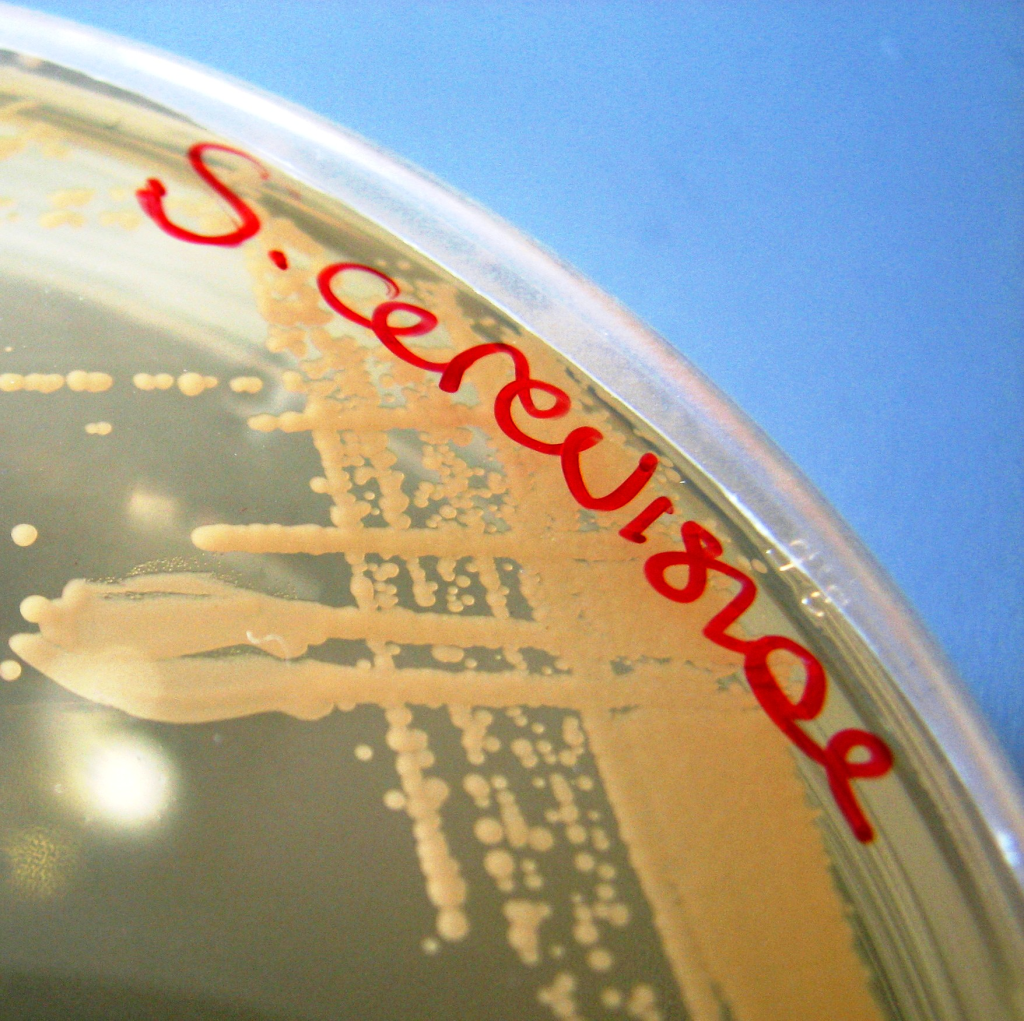
Saccharomyces cerevisiae yeast, also known as baker’s yeast, also have prion proteins that lose their original function when they misfold. The key difference is that, unlike in humans, misfolded prions can switch back and forth into their normal wild-type conformation and function, as well as a new prion function. This allows them to adapt to changing environments.
For example, with the yeast prion protein Swi1, the protein in its “off” state is in a normal conformation under normal conditions where glucose is abundant. However, when in an environment with only non-glucose sugar sources, which the yeast can’t directly use for fuel, Swi1 can switch conformation. This flips the prion state “on”, allowing the yeast to gain the ability to break down the sugars into glucose.
“The thought behind my PhD project was if we can understand how this switch happens and the elements that control this switch, can we then apply that to prion and prion-like proteins in humans to then understand disease and hopefully find a cure?” Cobos said.
Initially, Cobos found that histone modifications also changed with changing prion states. Then Cobos studied how the prion state exactly changes other features of yeast cells to make them more adaptable to new environments. Later, she investigated histone post-translational modification effects from prion-like proteins associated with the neurodegenerative disease amyotrophic lateral sclerosis (ALS). She had been mapping out the histone post-translational modification epigenome, and she had surprising results.
“We found that the changes to the histone PTM landscape are unique to each protein that misfolds, meaning that they really are changing the cell down at the genetic level,” Cobos said. “This is something that is spearheading this brand-new field of neuro epigenetics, which we’re really excited about.”
Cobos published several first-author research papers, including one published in the BBA – Molecular Basis of Disease, and one published in ACS Omega. She also presented her work at several research conferences including the 2022 American Society for Cell Biology Annual Meeting and the 2023 Middle Atlantic Regional Meeting of the ACS.
Furthermore, Cobos continuously taught during her PhD, focusing on General Chemistry I and II courses at Brooklyn College and thus broadening her teaching tool kit. Here, she had the opportunity to teach students from a similar background as herself, as Brooklyn College is an underrepresented minority (URM) serving institution. “It was fulfilling knowing that I could connect with students on that level, and the progression of their grades through the semester showed that the students were truly learning.” Cobos said. “I genuinely could not have made it this far without these students, as they have taught me just as much as I have taught them.”
From Yeast to Fruit Flies
Currently, Cobos is an NIH IRACDA postdoctoral fellow at Stony Brook University in New York. She works in the lab of Joshua Dubnau, whose research focuses on investigating mechanisms underlying ALS and frontotemporal lobar degeneration (FTLD).
Here, Cobos continues to study neurodegenerative diseases and protein misfolding, but on a much broader level. Rather than solely looking at histone modifications, she now looks at overall gene silencing and key activation patterns. Another key difference is that Drosophila melanogaster flies are now the model organism. She finds them cool to work with, and she loves how working with flies allows her to ask a wide range of broader questions.
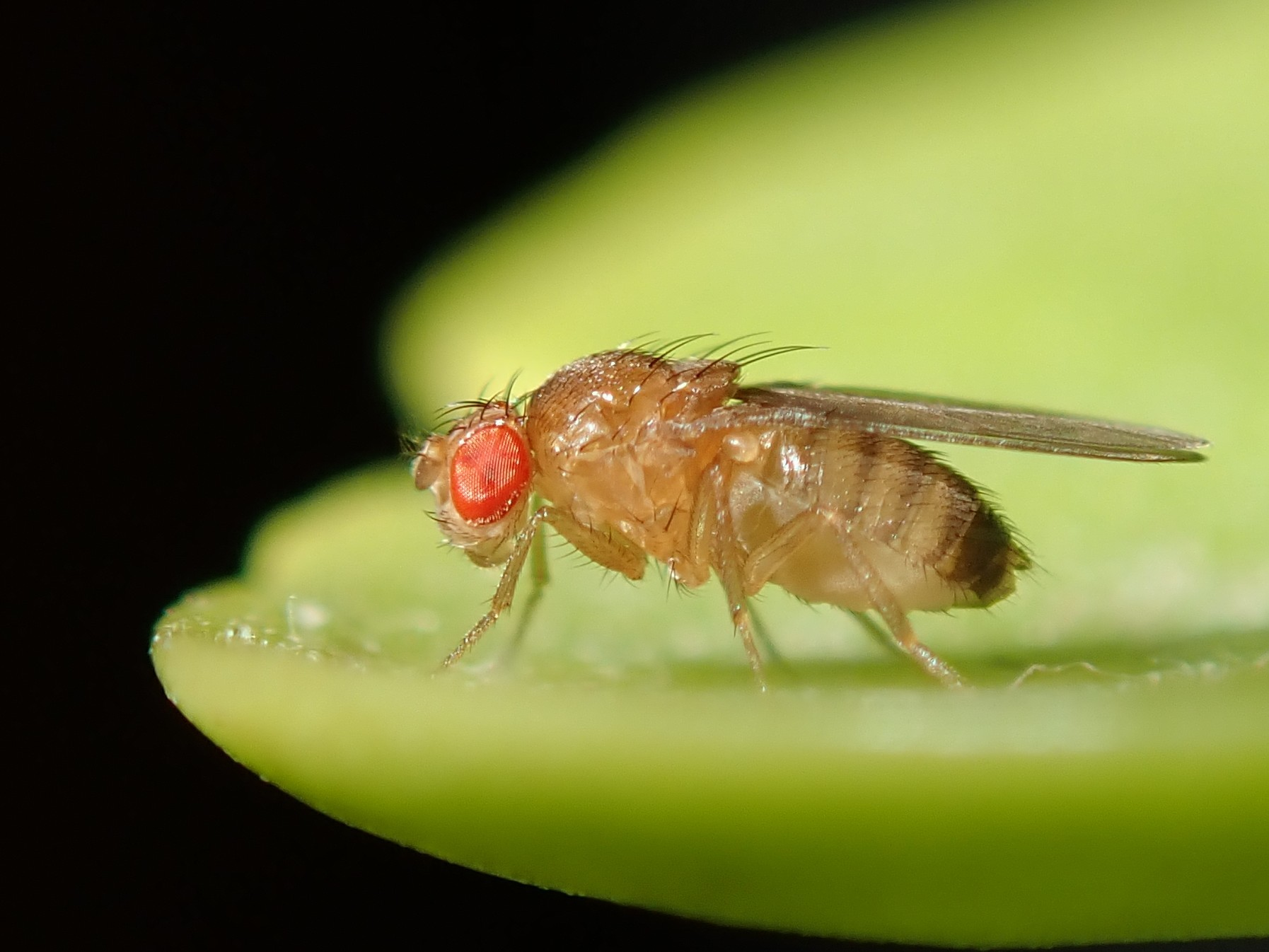
“They are the smallest organism that you can work with that still has a brain, which helps a lot when you’re trying to study something like neurodegenerative disease,” Cobos said. “Because now we get to ask these questions, we get to probe into cell-to-cell interactions. If these protein misfolding events start in a neuron, can they spread to a glia? If we induce protein misfolding in a glial cell, can we see it spread to a neuron? How quickly does it happen, and can we track it? And so on and so forth.”
“They also give us the extra dimension of studying age, because flies can live for up to 80 days, and neurodegenerative diseases usually don’t start affecting patients until after the age of 50. So, it really allows us to measure this comparatively to a human patient,” Cobos said.
For instance, they can observe if misfolding spreads in aged flies. They can also induce misfolding in younger flies, observe what occurs, and possibly relate it to what would happen in a younger patient. “It really gives us a huge variety of tools to just play around with everything,” Cobos said.
“Hopefully we can get a bigger clue as to what the ramifications are of neurodegenerative diseases and see if we can get some hint as to how to stop it earlier.”
A Long Passion for Teaching
Along with research, Cobos is passionate about teaching. She loved serving as a teaching assistant at Pace and an adjunct instructor at Brooklyn College. And after teaching laboratory and lecture classes as part of her IRACDA postdoc program, she fell even more in love with the practice. She particularly takes delight in her interactions with students.
“I love seeing that light bulb moment in a student when an idea finally clicks in their minds. That’s one of my favorite things,” Cobos said. “It’s really fun just seeing that moment where it starts to make sense, and it’s even better when they get curious and start asking their own questions. I don’t get tired of it.”
In the future, she hopes to become a principal investigator and help students fuel their curiosity. “The exciting part about science is that there really are no stupid questions. Everything is an angle that you should be considering. It really gives people the space to play, and I want to help facilitate that for students.”
Dr. Samantha Cobos was interviewed for this article.
The headshot was provided by the interviewee.
Other Image Sources:
 Jess Translating Science


Leave a comment