Reading time: 7 minutes
Jessica Desamero, PhD
Lillian Hodgkin was born eight weeks premature with a severe form of congenital heart disease, or CHD. In her case, part of her aortic arch was missing, interrupting the flow of blood through her body. In addition, the left and right blood vessels that connect the main pulmonary artery to the descending aorta were meant to close shortly after birth. But for Lillian, these vessels remained open. This, in turn, caused the oxygen-poor blood in her body to flow in the wrong direction, which made her heart muscle weak. (9)
“In my career of 33 years, I have never seen a heart anatomy like hers,” said Frank Ing, interventional cardiologist, chief of pediatric cardiology and co-director of the UC Davis Pediatric Heart Center, in a news article by University of California Davis Health. (9)
Unfortunately for infants, CHD is one of the most common abnormal conditions present from birth. Every year, about 40,000 newborns in the U.S. are diagnosed with CHD. About 1 in 4 newborns with critical CHD, like Lillian, need major clinical intervention within their first year of life. (1) Stent placement is a common, minimally invasive treatment for CHD overall. But stent treatment options have been limited for infants, until recently.
In 2024, the FDA approved a special stent system developed by Renata Medical, called the Minima stent. Unlike past stents, the Minima stent is specifically designed for infants and is tailored to accommodate for their growth. Throughout 2025, several pediatricians have started to offer this stent to their patients, and its clinical use continues to expand.
What is congenital heart disease and how does it affect the health of infants?
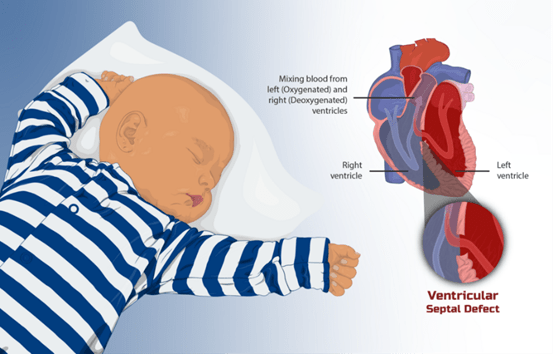
Congenital heart disease is present in nine out of every 1,000 live births. (2) Newborns with CHD have abnormalities with the structure of their heart, such as holes in the heart’s wall, issues with the amount or location of blood vessels and problems with heart valves; this in turn may keep blood from flowing normally. Some heart abnormalities reduce the amount of oxygen that can be delivered to cells and can cause low oxygen levels in the blood. (3) Some cases do not cause symptoms, but other cases are life-threatening and require treatment in infancy. Symptoms include bluish skin, lips or nails, excessive sleepiness, extended fatigue, heart murmurs and a weak pulse. CHD increases the risk of other serious health conditions, like abnormal heart rhythms, heart failure, high blood pressure in the lung arteries, kidney disease and liver disease. (3)
What were the treatment options for infants with CHD, and why were they limited?
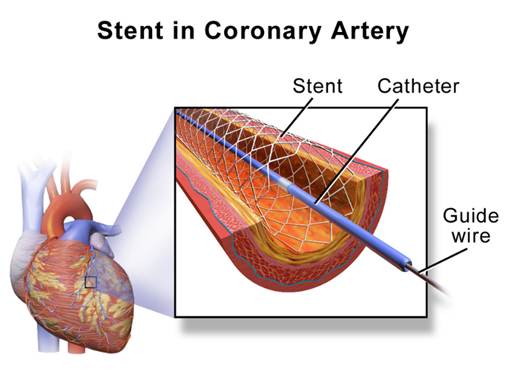
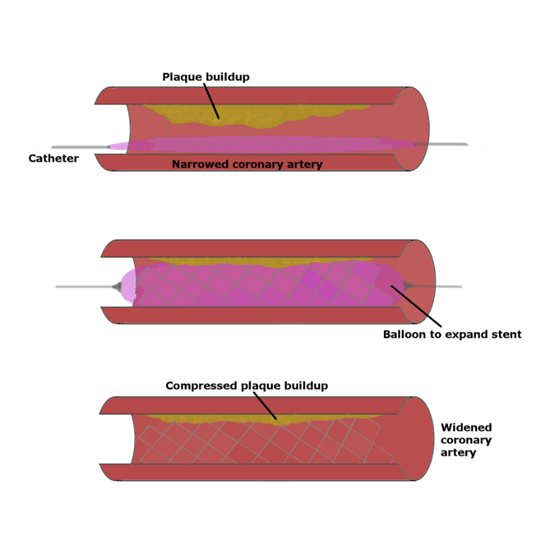
CHD is considered critical when the abnormalities severely limit oxygen flow, and infants with critical CHD require surgery or transcatheter intervention. Transcatheter interventions are minimally invasive procedures where doctors access the heart through blood vessels and thread a catheter through a small incision in the groin or arm. (4) The main type of transcatheter intervention is placement of a cardiovascular stent, a tiny wire-mesh tube that expands by a ballon, to open narrowed blood vessels and restore blood flow.
Since the 1990s, stent placement has been an increasingly common way to treat CHD less invasively. However, stent therapy has remained limited for infants, and few stents have been specifically developed to truly accommodate for an infant’s size and growth. (1) For instance, standard stents were tiny enough for doctors to insert into a baby’s blood vessels, but they can’t expand significantly and would eventually become too narrow for the growing child’s larger blood vessels. Doctors would then need to remove or replace these stents as the child outgrew them, which required open-heart surgery. In addition, no FDA-approved stent for infants existed at the time. It’s been common to use stents made for adults in infants, but this treatment is not ideal for them because of the significantly smaller size of their blood vessels. (5)
What makes the Minima heart stent special?
The Renata Minima stent is the first of its kind to be FDA-approved and specifically designed for infants and tailored to accommodate for their size and growth. (6)
This stent is a metal balloon expandable stent which comes pre‐compressed and loaded onto a Minima Delivery System balloon. The unique cell design allows for a wide range of stent diameter sizes, and it is designed to maintain structural integrity and radial strength, or resistance to compressive forces, over the entire range of diameter sizes. (7) At first, the stent has a small enough diameter to be suitable for implantation into infant sized vessels; over time, this stent is able to expand to diameters appropriate for adult-sized blood vessels. (6)
Extensive preliminary testing showed that this initially tiny stent can achieve adult-sized dimensions over time in piglets. (7) A multicenter early feasibility study demonstrated that this stent was safe and effective in treating infants with two types of congenital heart defects: branch pulmonary artery stenosis, or BPAS, and coarctation of aorta, or CoA. (5) Most importantly, a multicenter pivotal clinical trial, led by Children’s Hospital Los Angeles, further confirmed that this stent was safe and effective for treating PAS and CoA in infants and small pediatric patients. (8) In this study, stent implantation was successful in 98% of patients, and no serious adverse events occurred. Upon, early follow up, no device failure occurred, and the stent remained structurally intact.
How has the Minima stent been implemented recently?
Since its FDA approval in 2024, several leading pediatric hospitals have started to offer the Minima stent for their patients. Hospitals include Children’s Hospital Los Angeles, Nicklaus Children’s Hospital (Miami), Cedars-Sinai (Los Angeles), University of California Davis Health and Cohen Children’s Medical Center.
Lillian Hodgkin was one of the most recent success stories. She was treated with the Minima stent at UC Davis Health. (9)
Lillian initially underwent open heart surgery to repair her interrupted aortic arch, which restored her blood flow. But a follow up heart diagnostic test showed that her aorta narrowed. Following the test, her doctor decided to use the Minima stent on her. Since the implantation procedure, Lillian became livelier and more energetic. Doctors will continue to monitor her over time and will expand the stent as she grows. But as of now, thanks to the stent, she doesn’t need any more open heart surgeries and is in much better health than before.
Conclusion
Time will tell if these infants experience complications down the line, as it is too early to call. Moreover, Minima is not bioresorbable, and no other bioresorbable stents currently exist for pediatric patients. But bioresorbable stents, which can safely degrade and be absorbed by the body over time, are worth investigating in the future. They eliminate the need for removal surgery, and they reduce the risks of blood clotting, long-term endothelial dysfunction (where blood vessel linings fail to dilate properly) and chronic inflammation. (1)
But overall, the success rates and improvements in conditions in the above cases show the Minima stent system’s true potential as an effective go-to treatment for infants, especially for those who don’t respond to traditional interventions. And so far, the Minima stent has been used in specialized hospitals, but it has the potential for future widespread use.
(All image sources are under a Creative Commons license.)
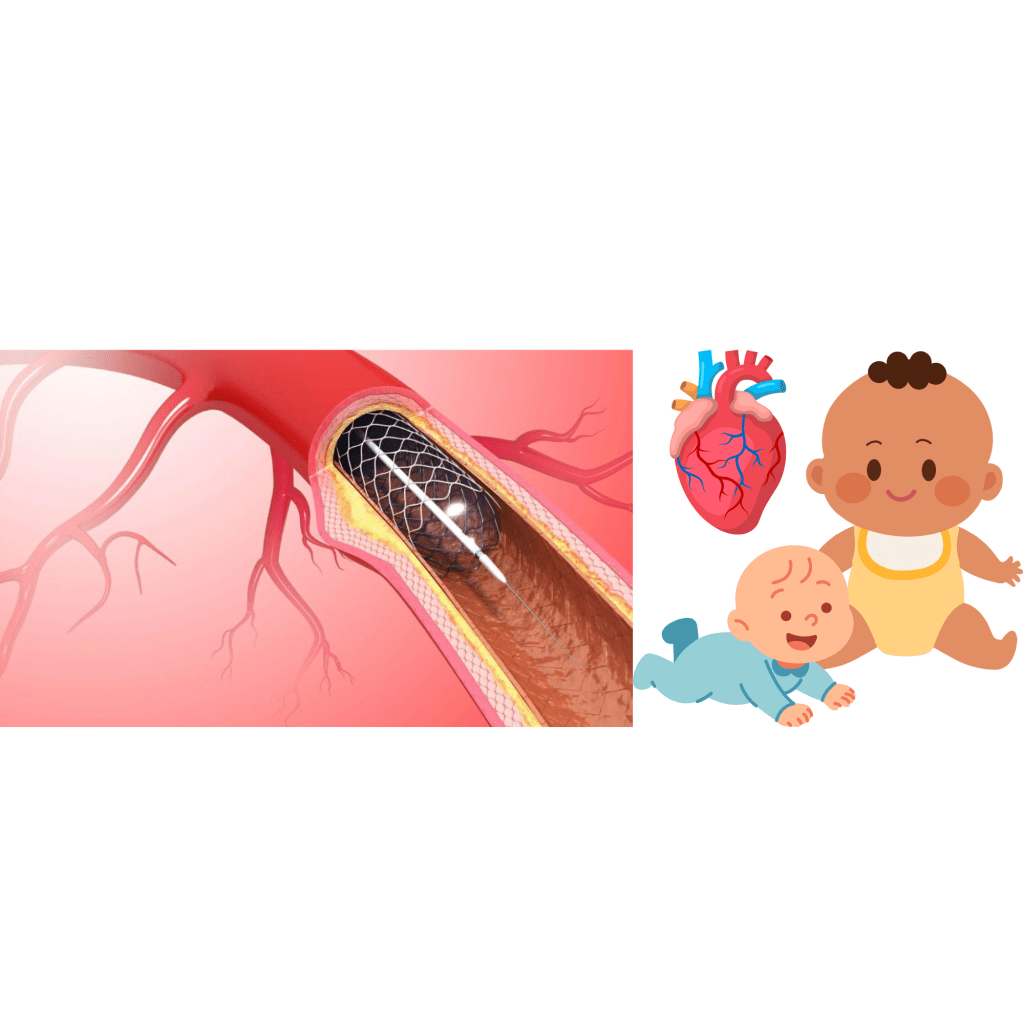
Header Image Source: Created by author with Canva.com, and includes an image from https://www.modernheartandvascular.com/coronary-stenting/
Figure 1 Image Source: https://commons.wikimedia.org/wiki/File:Depiction_of_a_child_with_Congenital_Heart_Disease.png
Figure 2 Image Source: https://commons.wikimedia.org/wiki/File:Blausen_0034_Angioplasty_Stent_01.png
Figure 3 Image Source: https://commons.wikimedia.org/wiki/File:Cobalt_Chromium_Coronary_Stent.png
References
- Hatayama, N., Watanabe, T., Yuhara, S. et al. Potential of Biodegradable Stents in Congenital Heart Disease. Biomedical Materials & Devices, 2025, 3, 349–366. https://doi.org/10.1007/s44174-024-00200-5
- Salvatori, G.; De Rose, D.U.; Massolo, A.C.; Patel, N.; Capolupo, I.; Giliberti, P.; Evangelisti, M.; Parisi, P.; Toscano, A.; Dotta, A.; et al. Current Strategies to Optimize Nutrition and Growth in Newborns and Infants with Congenital Heart Disease: A Narrative Review. J. Clin. Med, 2022, 11, 1841. https://doi.org/10.3390/jcm11071841
- Cleveland Clinic. https://my.clevelandclinic.org/health/diseases/21674-congenital-heart-disease
- Mayo Clinic. https://www.mayoclinic.org/tests-procedures/transcatheter-aortic-valve-replacement/about/pac-20384698#:~:text=During%20transcatheter%20aortic%20valve%20replacement,watched%20carefully%20after%20your%20treatment.
- Berman, Darren P, et al. “Results of the Multicenter Early Feasibility Study (EFS) of the Renata Minima Stent as Treatment for Branch Pulmonary Artery Stenosis and Coarctation of Aorta in Infants.” Catheterization and Cardiovascular Interventions, vol. 104, no. 1, 12 May 2024, pp. 61–70, https://doi.org/10.1002/ccd.31074.
- Renata Medical, Minima stent website page. https://www.renatamedical.com/?gad_source=1&gad_campaignid=21743788732&gbraid=0AAAAA-Qcwzeme30P0QWDQFGmd2vHEgCmJ&gclid=CjwKCAiA-__MBhAKEiwASBmsBKgNCuuxStmBpwLca6XB1sHHELVyjdn3HTGuFmqT4AMFZ9JQgkJtFRoCae0QAvD_BwE
- Zahn EM, Abbott E, Tailor N, Sathanandam S, Armer D. Preliminary testing and evaluation of the renata minima stent, an infant stent capable of achieving adult dimensions. Catheter Cardiovasc Interv. 2021;98(1):117-127. doi:10.1002/ccd.29706
- Sullivan, Patrick M., et al. “Multicenter Pivotal Trial of the Minima Stent for Vascular Stenosis in Infants and Young Children.” Circulation: Cardiovascular Interventions, 10 Oct. 2025, https://doi.org/10.1161/circinterventions.125.015618.
- Tomiyoshi, Tricia. “Infant Is First in Region to Get Innovative Stent That Grows with Her into Adulthood.” News, UC Davis Health, 5 May 2025, https://health.ucdavis.edu/news/headlines/infant-is-first-in-region-to-get-innovative-stent-that-grows-with-her-into-adulthood/2025/05. Accessed 27 Feb. 2026.
 Jess Translating Science


Leave a comment