Reading time: 8 minutes
Jessica Desamero, PhD
In January 2026 at a press conference, Robert F. Kennedy Jr., the current health secretary, announced new dietary guidelines, including a new inverted food pyramid. Kennedy claimed that prior guidelines incorrectly discouraged the consumption of fats and that this new pyramid fixes the problem by placing them at the top. “We are ending the war on saturated fats,” he said.
However, this statement goes against everything scientists and other nutrition professionals have been saying for decades. Time and time again, countless research studies have shown that saturated fats are bad for you. This is just one of the several reasons this new inverted pyramid is misleading.
The New Inverted Pyramid: A Little Done Right but Much More Done Wrong
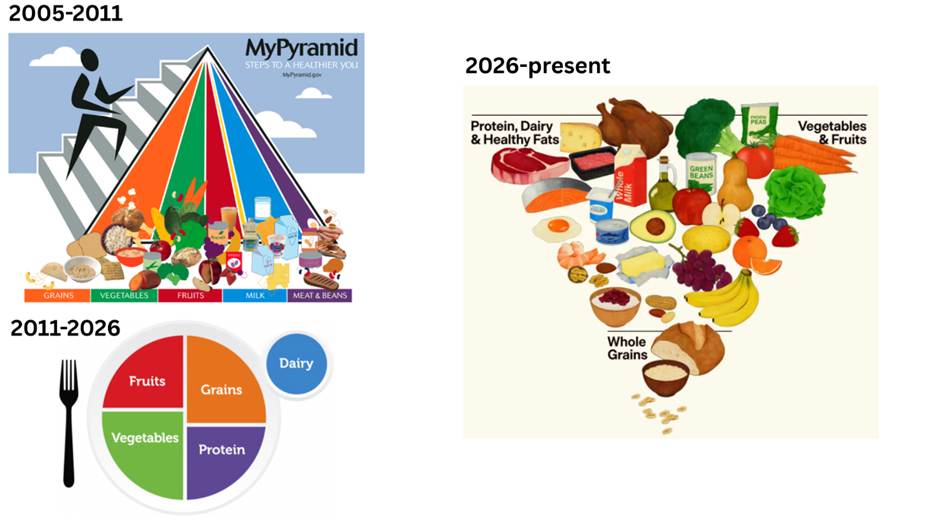
The new inverted pyramid does have a few things right. It does rightfully emphasize fruits and vegetables by displaying them towards the top right corner and having them take up 1/3 of the pyramid. In addition, the 2011-2026 MyPlate diagram gives clear and accurate food proportions in a simple and clean way, but the return to portraying food as pictures is more dynamic and engaging from a visual standpoint. And compared to the 2005-2011 pyramid, at least the pictures are displayed in a way that looks slightly less cluttered.
However, several things are misleading:
1. All meats are shown at the top, but not all meats are equal.
Poultry and fish are significantly lower in saturated fat than red meat. However, the 2026 pyramid displays all meats on the top left corner, as if they are equal in nutritional value. This is the heaviest grievance.
Countless scientists, nutrition experts and organizations, such as the American Heart Association and the Academy of Nutrition and Dietetics, warn that excess intake of saturated fats is linked to cardiovascular disease, the #1 leading cause of death in the United States. This is because excess saturated fat increases the levels of bad LDL cholesterol in your blood; this LDL cholesterol can then build up and potentially clog arteries, increasing the risk of hypertension, heart disease and heart attacks.
Not only is excess saturated fat bad for your heart; it is also bad for the rest of your body. Too much fat can increase insulin resistance and affect your body’s ability to respond to high blood glucose levels properly. And when there is too much fat in your blood for fat tissue to absorb and handle, the liver stores the excess fat, which, over time, can cause non-alcoholic fatty liver disease, or NAFLD. Both insulin resistance and NAFLD can significantly increase the risk of developing type 2 diabetes.
Fats are still important, but saturated fats should not be more than 10% of your daily dietary intake. The newly written guidelines do at least mention this statement, but the pyramid, which more people tend to look at, does not.
2. Whole milk is shown, but non-fat and low-fat dairy are healthier.
Dairy is beneficial to the diet, but like meat, not all dairy is equal. The 2026 pyramid depicts whole milk, but whole milk is high in saturated fat. Non-fat and low-fat milk are lower in saturated fat and are thus healthier.
3. Whole grains are shown on a small bottom corner, implying they’re not as important, but they are.
The written guidelines do say to prioritize fiber-rich whole grains. However, in the 2026 pyramid, whole grains are in a very small bottom corner, suggesting they aren’t as important. And again, since more people tend to look at the visual more than written guidelines, this poses a problem.
So, What Constitutes a Good, Healthy Diet?
Here are a few tips you can follow:
1. Reduce consumption of saturated fats and prioritize unsaturated fat food sources.
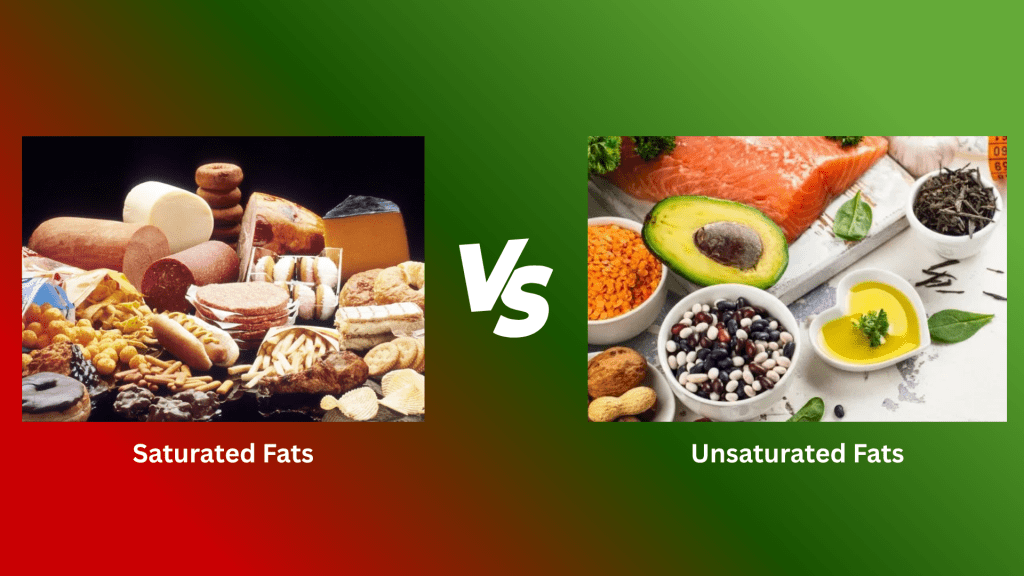
When it comes to fat, try reducing the consumption of foods high in saturated fat, such as red meat (especially animal fat), butter, fried foods, coconut oil, full-fat dairy, hydrogenated oil and shortening.
Instead, opt for more unsaturated food sources, such as olive oil, avocado oil, nuts and seeds.
Why are unsaturated fats better than saturated fats? Mainly, unsaturated fats help lower bad LDL cholesterol levels and raise good HDL cholesterol in the blood, which in turn lowers the risk of heart disease. They also help support metabolic health and brain health. Certain unsaturated fats even help ease chronic inflammation!
Moreover, it is important to consume enough omega-3 fatty acids, a type of polyunsaturated fat. Omega-3s are essential fatty acids that are crucial for heart health, brain health and vision. For instance, they help lower blood pressure, slow plaque buildup in arteries, maintain structural brain integrity and improve blood flow to the brain. They also provide structural support for the retina and help reduce overall inflammation. Foods rich in omega-3s include fatty fish, walnuts, chia seeds and flax seeds.
2. Eat fruits and vegetables.
Fruits and vegetables are rich in vitamins and minerals, vital essential nutrients that the body needs in small amounts to function, grow and develop.
For instance, carrots are rich in vitamin A, which is mainly important for vision. Meanwhile, bananas are rich in potassium, which is important for maintaining fluid and electrolyte balance in the body.
Below is a table of a few more vitamins and minerals, along with the fruits and vegetables that are rich in them:
| Vitamin or Mineral | Some Important Roles in Body | What happens if you’re severely deficient in the vitamin or mineral? | Fruits and/or vegetables rich in the vitamin or mineral |
| Vitamin A | Vision, immune function, growth, maintenance of epithelial tissue | Night blindness, xerophthalmia (eye problems) | Squash, yams, carrots, pumpkin, cantaloupe, dark leafy greens |
| Iron | Component of hemoglobin (carries oxygen to cells) and myoglobin (stores oxygen in muscles for use) | Iron-deficiency anemia (red blood cells smaller than normal; less oxygen delivered to cells) | Spinach, swiss chard, raisins, figs, dried apricots, prunes |
| Vitamin K | Blood clotting; Bone synthesis (synergistic with vitamin D; regulates osteoclasts – the cells that help break down and resorb bone tissue) | Hemolytic anemia (red blood cells destroyed faster than produced) | Dark leafy green vegetables, broccoli, asparagus, cabbage |
| Potassium | Maintaining fluid and electrolyte balance; nerve transmission, muscle contractions – incl. heartbeat | Muscle weakness, paralysis, confusion | Avocados, potatoes (white and sweet), spinach, bananas, cantaloupe, dried fruits (apricots, prunes), tomatoes |
3. Prioritize fiber-rich whole grains.
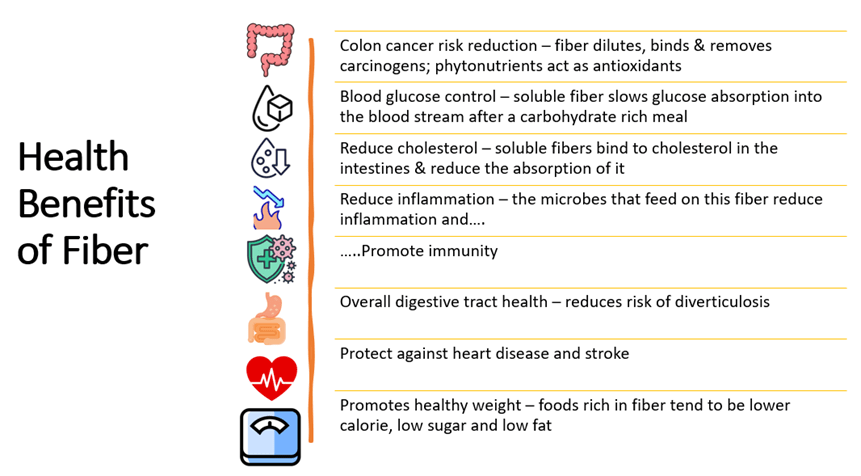
Whole grains provide a good amount of fiber, vitamins, minerals and antioxidants (these protect against oxidative damage to cells), all of which are critical to the body. Studies show that whole grains may even lower the risk of type 2 diabetes, cardiovascular disease and colorectal, pancreatic, and gastric cancers. While refined grains are still okay, the grain-refining process removes most of the fiber and nutrients, and they are thus not as beneficial.
So, when choosing what carbohydrates to eat, try going for whole wheat bread and brown rice, rather than white bread and white rice, if possible.
The DASH Diet
One diet that follows all of the above tips and then some is the Dietary Approaches to Stop Hypertension, or DASH, diet.
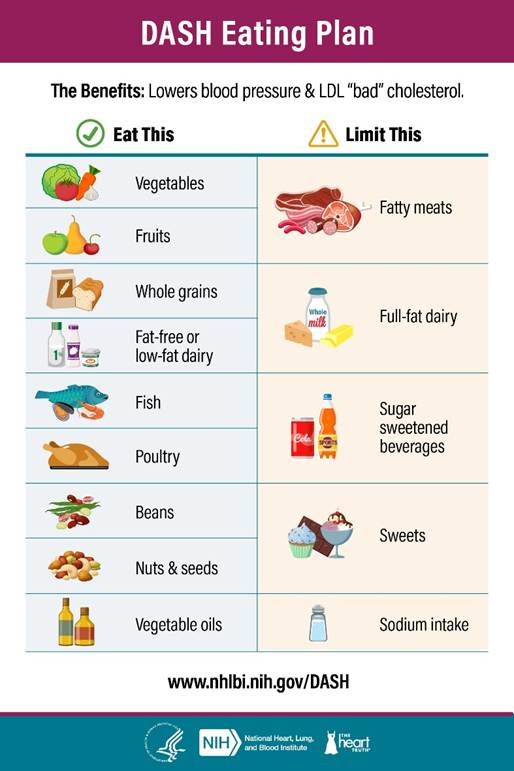
The DASH diet is a research-backed healthy eating plan designed to lower blood pressure and bad LDL cholesterol and ultimately improve heart health. This diet emphasizes eating fruits, vegetables, poultry and whole grains while avoiding fatty meats, full-fat dairy and added sugars. See figure 3 below for more DASH diet guidelines!
Several studies support the effectiveness of the DASH diet. One observational study involving around 3,000 adults showed a positive relationship between DASH diet adherence and lower serum levels of glucose, triglycerides and cholesterol (two types of lipids). Another clinical trial study showed that the DASH diet reduced hs‐cTnI (a marker of cardiac injury) and hs‐CRP (a marker of inflammation) progressively over 12 weeks in patients with elevated blood pressure or hypertension. These results suggest that the DASH diet has cumulative benefits over time on biomarkers of subclinical cardiac injury and inflammation. These are just two of the many studies that show that the DASH diet really works in improving health outcomes.
Conclusion
Bottom line: Excess saturated fats are still bad for you, and whole grains are still equally good for you, unlike what the pyramid depicts. As registered nutritionists, doctors, and scientists all say, it’s best to reduce consumption of saturated fats as much as possible. And it’s an added health bonus if you eat more whole grains, fruits and vegetables too!
Header Image Caption and Source: Saturated fat food sources vs. Unsaturated fat food sources. Created by author with Canva, and using images with Creative Commons licenses (saturated fats, unsaturated fats).
Figure 1 Source: Created by author with Canva, and using images found via Google search (MyPyramid, MyPlate, the new inverted pyramid).
Figure 2 Source: Created by author with Microsoft PowerPoint, and using images found via Google search.
Figure 3 Source: https://www.nhlbi.nih.gov/health/dash-eating-plan
In addition to writing and science communication, Jessica Desamero has taught an undergraduate lecture and lab course called Nutrition and Personal Health at St. Joseph’s University-New York.
Main Works Cited
(more references are hyperlinked throughout article)
- Aubrey, Allison. RFK Jr.’s New Food Pyramid Puts Meat, Cheese and Vegetables at the Top. NPR, 7 Jan. 2026, www.npr.org/2026/01/07/nx-s1-5667021/dietary-guidelines-rfk-jr-nutrition.
- Sizer, F. S., & Whitney, E. N. (2023). Nutrition: Concepts & Controversies (16th ed.). Cengage.
- Maki KC, Dicklin MR, Kirkpatrick CF. Saturated fats and cardiovascular health: Current evidence and controversies. J Clin Lipidol. 2021 Nov-Dec;15(6):765-772. doi: 10.1016/j.jacl.2021.09.049. Epub 2021 Oct 1. PMID: 34649831.
- Cleveland Clinic. Unsaturated Fats: Why You Need Them in Your Diet. Cleveland Clinic, 24 Aug. 2022, https://health.clevelandclinic.org/the-skinny-on-unsaturated-fats-why-you-need-them-the-best-sources
- Cleveland Clinic. Omega-3 Fatty Acids. Cleveland Clinic, 17 Nov. 2022, my.clevelandclinic.org/health/articles/17290-omega-3-fatty-acids.
- Dighriri IM, Alsubaie AM, Hakami FM, et al. Effects of Omega-3 Polyunsaturated Fatty Acids on Brain Functions: A Systematic Review. Cureus. 2022;14(10): e30091. Published 2022 Oct 9. doi:10.7759/cureus.30091
- Khan SU, Lone AN, Khan MS, et al. Effect of omega-3 fatty acids on cardiovascular outcomes: A systematic review and meta-analysis. EClinicalMedicine. 2021;38:100997. Published 2021 Jul 8. doi:10.1016/j.eclinm.2021.100997
- McRae MP. Health Benefits of Dietary Whole Grains: An Umbrella Review of Meta-analyses. J Chiropr Med. 2017;16(1):10-18. doi:10.1016/j.jcm.2016.08.008
- Shoaibinobarian N, Danehchin L, Mozafarinia M, et al. The Association between DASH Diet Adherence and Cardiovascular Risk Factors. Int J Prev Med. 2023;14:24. Published 2023 Feb 25. doi:10.4103/ijpvm.ijpvm_336_21
- Belanger MJ, Kovell LC, Turkson‐Ocran R, et al. Effects of the Dietary Approaches to Stop Hypertension Diet on Change in Cardiac Biomarkers Over Time: Results From the DASH‐Sodium Trial. Journal of the American Heart Association. 2023;12(2). doi:https://doi.org/10.1161/jaha.122.026684


Leave a Reply