Reading time: 9 minutes
Jessica Desamero, PhD
Opioid drugs like morphine are primarily used to relieve moderate to severe pain. They bind to opioid receptors on nerve cells in the brain and spinal cord to block pain signals and release dopamine. However, opioid use carries a substantial risk of dependence and overdose. Moreover, stress-triggering events can influence how organisms respond to opioids.
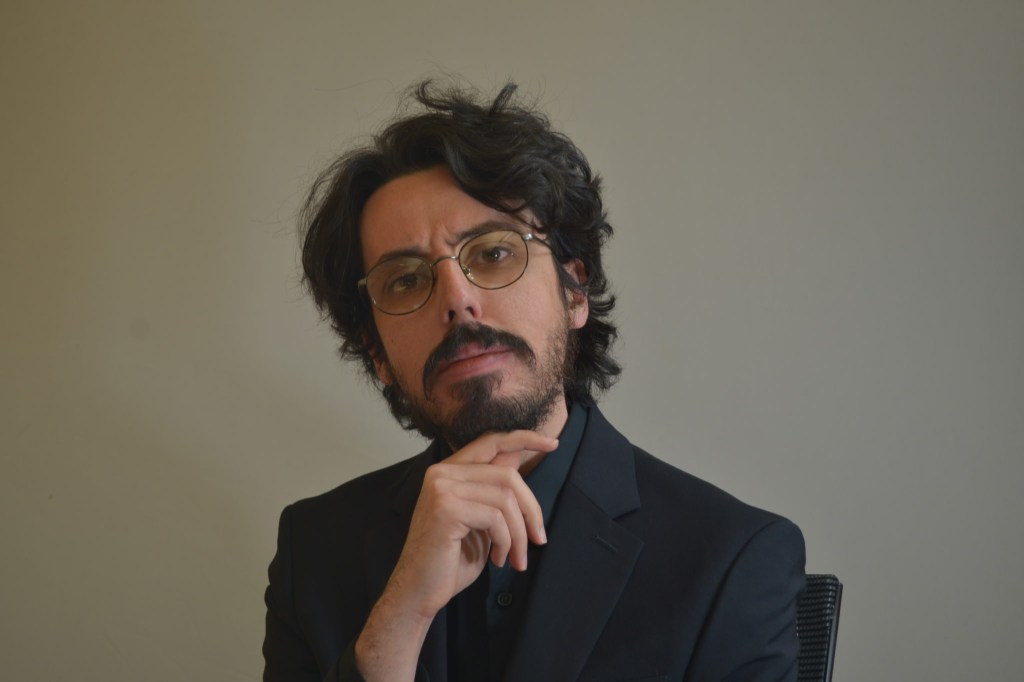
Postdoctoral fellow Christopher O’Brien works with the NIH’s National Institute on Drug Abuse (NIDA) to study how stressors change how organisms behave and biologically react to opioids. He uses his past PhD research on opioids and alcohol use disorder to inform his work at NIDA and further understand the neuroscience behind opioid drug abuse.
“I really want to understand how the brain is reacting to these stimuli,” he said. “If we understand the how and the why, we have a better chance of answering how we can make treatments better and how we can change our lives to facilitate healthier options.”
First experiences with science and neuroscience
Ever since his aunt gave him a toy microscope for Christmas as a kid, O’Brien had a fond love for science.
His first official research experience was when he worked at a neuroscience lab as an undergraduate student at Queens College. He studied neurogenesis, the process by which neurons are born in the brain. He focused on how neurons born in adulthood contribute to memory and language formation, using birds.
“For a long time, there was a notion that after a certain age, your brain stops making new cells and stops growing. But your brain still makes new neurons throughout adulthood, and they’re important for maintaining memories and maintaining processes like language,” he said.
O’Brien valued this lab experience so much that he wanted to pursue a PhD. “It was definitely working in a lab, getting experience, doing the science, and asking questions,” he said. “A lot of the people I met there were also super nice and super cool, and I wanted to keep doing fun, cool science with fun, cool people.”
Opioid use and alcohol use disorder
O’Brien received his PhD in Neuroscience from Rutgers University. In his early days of the program, he did a lab rotation that piqued his interest in pain and the sensory processing of touch. He then decided to study sensory processing in relation to drug addiction.
For his dissertation, he worked in David Barker’s lab, which investigates the neural circuits involved in psychiatric disorders. O’Brien started his thesis project by studying how drugs and sensory processes overlap with one another to create profiles for drugs of abuse.
“We wanted to profile how mood disorders, like depression or anxiety, and pain disorders, like chronic pain and drug addiction, overlap. And we were trying to ask this chicken and the egg question of what comes first,” he said.
Later, his project morphed. First, he started to focus on opioid drug susceptibility, or how a person’s body responds genetically, biologically, and behaviorally to opioid medications.
“We never wound up answering this chicken or the egg question, but we started to narrow the focus to, ‘How does drug susceptibility or opioid susceptibility look like? Is it a pain profile? Is it a depression anxiety profile; or mood disorder profile? And how do these overlap to create an opioid susceptibility profile?’” he said.
In one study, O’Brien evaluated how stress changes susceptibility to opioid abuse in mice. He wrote a first-author research paper and published his findings in the Journal of the Experimental Analysis of Behavior.
In this study, he found that physical stress heightened mechanical sensitivity, or the sensory receptors’ responsiveness to physical, mechanical forces. This in turn led to a higher preference for opioids in mice with a history of stress. His other findings in this study further showed that stress can function as a physiological modulator.
“If you’re really stressed out, you’re more sensitive to pain. You’re probably also a little bit on edge, and you might have anxiety or depression symptoms. All those things were related to future drug opioid intake,” he said.
From there, O’Brien wanted to see if it was possible to manipulate areas in the brains of mouse models to prevent mice from being susceptible to opioid use.
“It seems like stress acts as a switch to turn on these mechanisms or these adaptive behaviors. If you have sensitivity to pain, you will avoid things that are painful, thus also reducing your stress. But in a complex world like the human world, it’s very hard to differentiate these things,” he said.
“So, in a mouse model, we can pick apart all these distinct aspects and different areas of the brain and try to see which phenotypes are important for which behaviors. We can also turn off brain regions and see if the phenotypes go away or not,” he said.
In this project, he focused on the lateral habenula, an area near the back of the thalamus that is conserved across fish and humans and acts as the brain’s anti-reward and punishment-processing center.
“I wanted to turn this area off during stress to see if we could gate or prevent these profiles that predict opioid susceptibility from emerging and if we could prevent opioid use or future opioid use seeking preference,” he said.
O’Brien has a research paper in the works about this project’s findings.
Studying opioid use at NIDA
Currently, O’Brien is a postdoctoral research fellow at NIDA, where he delves even deeper into his study of opioids. He works with George Koob, Renata Marchette, and Leandro Vendruscolo as part of the Neurobiology of Addiction Section (NOAS).
His research investigates how stress hormones like cortisol impact future drug seeking.
“You have this mood component and this pain component that are both working in tandem to support this drug taking or drug seeking. And then it’s a feedback loop because taking an opioid will make you more sensitive to pain and thus more sensitive to lower mood states, like depression, and that will lead you to taking more. This feedback cycle forms the foundation of what George has coined as the Three-Stage Addiction Cycle,” he said.
“And pain is subjective, like the pain I feel is different from the pain you feel versus someone who’s on opioids. Sometimes, people from diverse cultures also experience pain differently. So, it’s this very vibrant tapestry of a problem, and putting people into certain little predefined boxes is not great for treatment options. So how do we combat that with the basic biology and psychology to make these better treatment plans? You have to look down all the avenues,” he said.
One of his projects involves testing fentanyl intake in mouse models. Another project involves looking at how the pharmacology of an amphetamine-like drug called methylphenidate differs between humans and rodents, and whether the rodent models are sufficient for studying this drug. He notes that biological systems are all different and will metabolize drugs differently, highlighting the need for this research.
O’Brien and his team are also working on anesthesia projects. “My one PI, George Koop, is very interested in how anesthesia works and has a collaborator, Jill Ballantine, who is an anesthesiologist in California. They just released a paper on how medical doctors will use fentanyl or other types of synthetic opioids for anesthesia. We don’t fully understand how or why it works, but we know that it does work,” he said.
“So, we want to understand the risks for people who have susceptibility to opioid intake, as well as the risks for people developing chronic pain and diseases related to chronic pain, if they go under deep anesthesia or if they take opioids for long periods of time.”
How he got to NIDA and his love for brain science
O’Brien got to NIDA after a chance encounter at a conference, showing that human connection is invaluable and that anything can happen when you least expect it, especially when you’re proactive. He was presenting his research at the Winter Conference on Brain Research next to Marchette, who saw his interesting data and cool experiments. They then talked extensively at the conference. One month later, O’Brien reached out to express interest in working with NOAS. Marchette said yes to an interview, and shortly after, O’Brien received an offer.
“I love all the people that I work with. It’s a really fun time, and getting to talk about science all day every day is great,” he said about his experience so far at NIDA.
Overall, O’Brien has a true passion for neuroscience.
“I’m really interested in how the brain functions because I think the brain is the coolest organ that we have,” he said. “It’s our little captain that works off of electric meat, and it’s all just saline going in and out of lipid bilayers at certain thresholds. Just the fact that we can perceive anything, I think, is a miracle and is astounding.”
With his research, he aims to help make better treatments by focusing on understanding the neuroscience behind them.
“There’s a lot of focus on how we form better treatment plans and options, and those are really important for the here and now. But there also needs to be a background of understanding what the basic biology and psychology that are supporting these working treatments are,” he said.
Time will tell on what the future holds, but to O’Brien, what matters most is staying at the heart of science: fueling natural curiosity.
“I genuinely love science and want to keep doing science in whatever capacity that is. I also love working with really bright people and students in finding answers to weird, strange questions about the natural world and how things work,” he said.
“Part of science is a business now, and I’m just trying to make science weird again.”
Dr. Christopher O’Brien was interviewed for this article.
The headshot was provided by the interviewee.


Leave a Reply